Using multiple Solr cores with DDEV
If you want to have multiple Solr indexes using Search API, you need to have a core for each index instance. For my local development stack, I use DDEV.
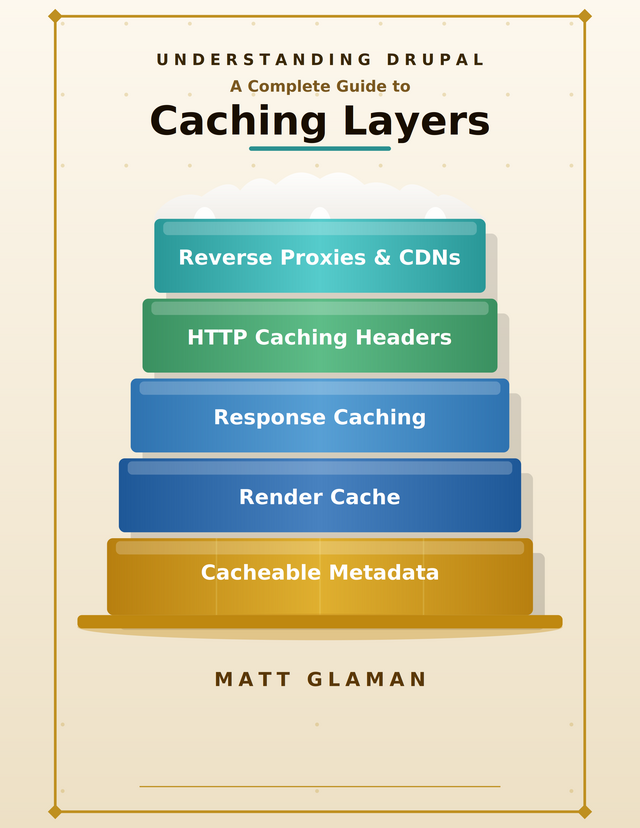
A deep, practical tour through every caching layer in Drupal — from the render cache to chained fast backends.
Get it on LeanPub
If you want to have multiple Solr indexes using Search API, you need to have a core for each index instance. For my local development stack, I use DDEV.
For a long time, I have had Google AdSense on my website. It generated enough revenue that I could hit the minimum payout of $100 about once a year, covering my hosting costs. Then, a few months ago, I found CodeFund by Gitcoin.
At Drupal Europe, Dries announced the release cycle and end of life for Drupal's current and next version. Spoiler alert: I am beyond excited, but I wish the timeline could be expedited. More on that to follow.
Here is a quick breakdown:
I have been spending the month of May cleaning out my basement office. I have found a treasure trove of old papers and random things bringing up memories and other thoughts. Just like my last blog post on an organization's values and the culture it creates. This time I found two legal pads which had my notes and planning for my first Drupal Meetup talk and first came session.
Last week I started to clean out my office. It has been the same since I started working from home in the spring of 2014. I had left a local marketing agency to work for an education software company, called Gaggle. While cleaning I found some items I had kept from my year and a half at the company.
This is a follow up to my early blog post about enabling RESTful web services in Drupal 8. Jesus Olivas, one of the creators of Drupal Console, brought up that you can actually manage your RESTful endpoint plugin configurations direct from the command